Pages

Showing posts with label Warren Anderson. Show all posts

Wednesday, June 23, 2010

Bhopal Gas Tragedy : What about the poisonous gas of hypocrisy?

 
Twenty-five years and a half later what Bhopal exposed is our collective hypocrisy. It is not just a case of too lenient a punishment given by a single judge, but the failure of the entire system. Our Parliament, Judiciary, Executive – both political and permanent – and of course the Press all let us down.
 
And now we are all enacting a drama titled The Bail-out of Warren Anderson.
 
The media barons – not just young reporters and sub-editors – think that the readers or the audience are the greatest fools, therefore, should be bombarded with all the old stuffs just to dramatise the situation and earn some fast buck through advertisements. So whatever is appearing in the Press is a sort of re-mix of a quarter century old songs, of course tragic ones. All what is appearing about Anderson is nothing new.
 
Everyone who matters – and old enough – is aware that he was ushered back into his own country with full state honour by the Indian state.
 
We all know that we are not going to get the 89-year old Anderson. For a moment, suppose that he is extradited by the United States. What are we going to do with him? After all what have we done to the remaining eight Indian officials – one in fact died in the prolonged legal battle. Two years imprisonment and then bail. If Anderson is being demanded for this much then we must be generous enough to pardon him!
 
The issue is just not the accidental leak of poisonous gas, but how is it that an industry of such a nature got established in the densely populated part of Bhopal. Why did the government not force the industry to shift from the place?
 
India is a unique country where industries are situated in the heart of many cities while schools in the suburbs. Or if that is not the case the population is allowed to grow around the industries, which actually were in outskirts.
 
In many of our cities schools are set up 10-20 or even more kilometres away from the population because most of the private institutes are opened by businessmen who get cheap farm land in the outskirts of the town. Therefore, children are made to travel more than a couple of hours daily inhaling all sorts of gases on way and back.
 
In contrast, industries are situated in the heart of towns because the government lacks vision and planning. Not to speak of Warren Anderson or anyone else, we cannot influence or force our own industrialists to shift their bases outside, nor can we prevent the growth of population near the industries. The nexus between the ruling class – not just politicians – the industrialists and the land mafia plays a key role in accidents like the one which took place in Bhopal.
 
What we all need to tell the people frankly is: Yes we cannot bring Anderson because he was the boss of an MNC. No, even our own industrialists are above the law. And that Bhopal is just a small price for the ‘development’ of the country.
 
Yet one thing should be kept in mind that we were in the Soviet camp then and opposed to the United States’ design in the world. In spite of that the American influence proved so influential. Today when the Soviet Union does not exist and India is wholly in the US camp the amount of pressure the lone Super Power can put on us in any given circumstances can only be imagined.

From Soroor Ahmed's article in Radiance. More Here.

Monday, June 21, 2010

What is wrong with the Indian media?


Bihar’s police blinded a dozen undertrials with cycle spokes and acid in Bhagalpur (the story of this casual act of punishment took weeks to emerge). Government engineers on deputation regularly abused tribal women, and there was no end to stories about the barbarism in the Indian village (there still is no end).

But there was always something missing from this journalism, and it is this: You could read Indian newspapers every day for 30 years and still not know why India is this way. The job of newspapers is, or is supposed to be, to tell its readers five things: who, when, where, what and why. Most newspapers make do with only three of these and are unlikely to really tell you “what”. This is because urban Indians are tired now of reading the horror stories that come out of our villages. Only a couple of newspapers, such as TheIndian Express, persist in reporting news that isn’t pleasant, and they haven’t much circulation.

No newspaper at all can tell you “why”, because they do not know themselves. The same stories from 30, 50, 100 or 500 years ago keep repeating here, and the peasant will still murder his daughter for falling in love. The happenings in the city are also difficult to understand. The news from May was that Delhi University sold radioactive Cobalt-60 as scrap. This killed the merchant who bought it and crippled another. The university, which is supposed to be a research body, had unthinkingly buried some of the other Cobalt-60 earlier and this will poison the ground.

Why are we so casual? Nobody can say, and there will be an explanation along the lines that it was an accident. But this will happen again, of course.

Union Carbide’s plant in Bhopal was owned by Americans. But it was managed, staffed and run by Indians. Its foreman was Indian and its workers were Indian. Why were they so casual about their own safety? The media doesn’t know, but it is convinced the solution lies with getting Warren Anderson.

From Aakar Patel's article in Livemint. More Here.

Monday, June 14, 2010

What about the 'Indian Andersons'?

The Sunday Guardian (June 13, 2010), New Delhi, has published a Portrait of Shame. Since the newspaper is not still online it was difficult for me to cut and paste the pictures from web and paste it for you to see. It is not in that particular order, but here is the picture gallery.

While everyone is wanting Warren Anderson to be sent back to India, what is equally important is to take these powerful politicians and bureaucrats to task. The nation cannot let them get away so easily. At the same time, it is important to include (in this list) all those politicians who have been battling in the court for the multinational companies. 

There is an urgent need for a political cleanup. Unless we clear the known and exposed toxic elements from politics, no amount of clean up at Bhopal will ensure that such disasters do not happen in future. All political parties have to come clean on this. We as civil society should treat them as untouchables, vowing never to connect with them, a kind of a social boycott if nothing else works.

Wake up India, you need to do more than just feel ashamed.    

ARJUN SINGH: Then Chief Minister of Madhya Pradesh, who made the state aircraft available to warren Anderson so that he could escape from Bhopal, never to return. Carbide is believed to have funded his trust.
JUSTICE AHMADI: He reduced the charges from Section 304B of Indian Penal Code (culpable homicide not amounting to murder) to Section 304A of IPC (road accident caused by irrational driving) and was rewarded with chairmanship of Bhopal Memorial Hospital Trust after retirement.  


KAMAL NATH: During 2006-07, as Union Commerce Minister Kamal Nath argued for soft terms to Dow in the hope of getting American investments into India. 

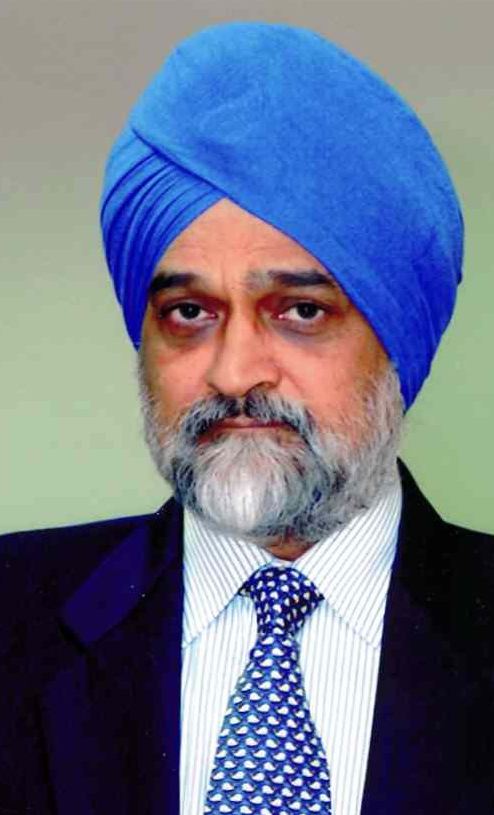
 MONTEK SINGH AHLUWALIA: During 2006-07, Deputy Chairman, Planning Commission, was more loyal to Dow than to Bhopal victims. As virtual spokesman of American corporate interests, he played a key in pushing for relief for Dow.

ABHISHEK SINGHVI: Congress spokesperson and Rajya Sabha member offerd handosmely remunerative legal advice to Dow Chemical and wrote, on Congress' letterhead, to the Prime Minister in 2007 that Dow should not be held liable for the gas tragedy.

M K RASGOTRA: Was Foreign Secretary when the tragedy occurred, and used his office to help Anderson escape. He held a half hour meeting with Carbide chief that fateful evening.
The three names in the original list which I have not been able to portray here are: Warren Anderson, Jairam Ramesh (for saying in 2009: "I held the toxic waste in my hand. I am still alive and not coughing. It's 25 years after the gas tragedy. Let's move ahead"), and also Ronen Sen, who in 2006-07 as Indian Ambassador to the US, made all the noises that Dow Chemical wanted to hear.
From Devinder Sharma's post in his blog. More Here

Saturday, June 12, 2010

''Bhopals will happen, but the country has to progress," said the Prime Minister


"Bhopals will happen, but the country has to progress.” Hard to believe, and enraging too. According to Sathyu Sarangi, a member of the Bhopal Group for Information & Action, a voluntary body, this is what Prime Minister Manmohan Singh told him and six of his colleagues when they met him on April 17, 2006, to press for action against Union Carbide Corporation (UCC), a wholly owned subsidiary of the American firm Dow Chemical Company since 2001. “Yes, I remember that clearly. This is what the prime minister said,” Sarangi tells Outlook.

Over quarter of a century after the gas tragedy in Bhopal, doubts linger that it is US pressure that may have enabled Warren Anderson, the then CEO of UCC, to go scot-free—being released from arrest in Bhopal and flying back home—and forced the government to rein its authorities from acting against UCC. Now, a set of new correspondence accessed by activists using the RTI, copies of which are with Outlook, reveals how the current CEO of Dow, Andrew Liveris, has been trying to lobby the prime minister and his office, along with senior ministers of the UPA government, to support the firm’s business interests in India despite continuing public opposition over its unwillingess to accept responsibility for Bhopal.

From Debarshi Dasgupta and K. S. Shaini's report in Outlook. More Here

Friday, June 11, 2010

Bhopal, Corporate America, Warren Anderson and Manmohan Singh


With 15,274 dead, 5,74,000 affected, and a verdict that should have been delivered in 26 days taking 26 long years, and that too a mockery of justice, no heads have rolled. While the newspapers are splashed with reports of the Bhopal verdict, I find Prime Minister Manmohan Singh quoted in a separate report from Srinagar, which he visited yesterday, also published on the front pages. Isn't it amusing to read the PM saying: 'Will Safeguard human rights in Kashmir.'
You couldn't even safeguard the rights of the Bhopal victims, Mr Prime Minister.

I don't understand how come the Prime Minister does not feel morally compelled to submit resignation over the injustice delivered in the world's worst industrial disaster. He will not. Because he is busy laying out a red carpet for Corporate America. He has an 'incomplete task' on hand. How can he apologise when he is busy fine tuning the Nuclear Liability Bill, to be introduced in the next session of Parliament, for which he may receive an honorary doctorate from the Harvard.

Last time, he was conferred with an honorary doctorate from the Oxford, Manmohan Singh had showered praise on the British for what they did during the days of the Raj !

You may have forgotten something that still remains embedded in me. When the Securities Scam burst in India, and I am talking of the period when Manmohan Singh was the Finance Minister, it was not only stock broker Harshad Mehta who was involved. Two foreign banks, including Citibank, were also involved. I still remember vividly when Manmohan Singh refused to initiate any action against the erring banks, saying: "It will send out a wrong signal."

Didn't I say Company Raj is back.

Seeking extradition of Warren Anderson, Union Carbide CEO at the time of disaster and until his retirement in 1986, was never pursued vigorously because it would send a wrong signal. And yes, Manmohan Singh did send a 'right signal' when he said that "India loves George Bush".

From Devinder Sharma's post in his blog. More Here

Thursday, June 10, 2010

How Warren Anderson ''escaped'' from India?


The Union Carbide chief was arrested at Bhopal airport when he arrived four days after the 1984 gas leak that killed at least 15,000, but was let off within hours after an unidentified top government leader in Delhi made a call to chief minister Arjun Singh. Rashid Kidwai reports in The Telegraph:
One of the two pilots, Captain D.C. Sondhi, told The Telegraph the police officers repeatedly offered to carry the American’s hand luggage as they escorted him to the plane at Bhopal airport.

“Memories of that scene still make me angry,” said Sondhi, 72. “Here was a man responsible for the death of thousands, and our government officials were saluting him!”

He added: “The buzz among bureaucrats was that US President Ronald Reagan had spoken to someone important in India to get Anderson out quickly.”

The Union Carbide chief was arrested at Bhopal airport when he arrived four days after the 1984 gas leak that killed at least 15,000, but was let off within hours after an unidentified top government leader in Delhi made a call to chief minister Arjun Singh.

During his six-hour stay in Bhopal, Anderson, who wore a mask, appeared casual and showed “signs of arrogance”, said Moti Singh, who was then Bhopal district collector. But the American piped down when he was told he was being released.

“At first he wasn’t even willing to leave Bhopal, he wanted to see the affected area. I told him, ‘You are not welcome, you have to leave Bhopal’. I also told him there was a risk to his life and in no case could he be allowed to go to the affected areas,” Singh said.

Captain Sondhi, then director of aviation in Bhopal, received the call from Arjun Singh’s office at 2.30pm.
“I was asked to get the state government plane, a B-200 Super King, ready. Soon, city superintendent Swaraj Puri arrived with Anderson,” Sondhi said.

“Anderson was carrying a garment box (containing a business suit) and a briefcase. I remember police officers repeatedly requesting him to let them carry these pieces of luggage. Anderson said, ‘No, no, I will carry them myself.’ When the plane was about to take off, the officers saluted him and wished him good luck.”

The other pilot, Captain Syed Hasan Ali, remembers Anderson dozing off mid-flight. “He was calm but in a hurry to reach Delhi,” said Ali, whose father had become ill after the gas leak.

“My relatives lived in the Jahangirabad locality, a short distance from the Carbide factory, so none of them was grievously affected. My father died shortly after, and I am still not sure whether it was because of the gas or just his age.”

“For me, he was like any other passenger. I was doing a job and the thought that he was leaving, never to return, did not occur to me. In any case, what could I have done?”

Ali said that when Anderson got off at Delhi’s Palam airport, he made it a point to thank the crew. “He shook our hands and waved at some officials who appeared to be from the US embassy. Then, suddenly, he was gone.”
Yet, earlier in the morning, the state government had appeared serious about cracking down on Carbide and Anderson.

Collector Singh recalled: “I was summoned by Arjun Singh to his residence at 8am. He told me Anderson would be arriving in Bhopal shortly and that airport officials had been told not to let his plane land till I (Moti Singh) had arrived there.”

By the time Singh reached the airport the plane had landed but its door had not been opened. Inside, Anderson was waiting with Union Carbide India chairman Keshub Mahindra and managing director Vijay Gokhale.

Singh said all three were arrested as soon as they got off the plane and taken to Carbide’s Shyamala Hills guesthouse. The police filed a case of culpable homicide against them.

“But at 2pm, chief secretary Brahm Swaroop called me and superintendent Puri to his office. He told us a plane was waiting for Anderson and asked us to complete the formalities to ensure he could fly to Delhi as soon as possible,” Singh said.

“We quickly arranged for a Carbide employee to secure his bail against a surety of Rs 25,000.”

Singh said he was struck by Anderson’s knowledge about the plant and the sequence of events following the leak. “He told me that when the gas leaked there was no wind, so the gas went up initially; but around midnight, a southerly wind started blowing and spread the gas around.” More Here.

Translate

Related Posts Plugin for WordPress, Blogger...