Pages

Showing posts with label India's Foreign Policy. Show all posts

Tuesday, August 02, 2011

India’s poor relations with its neighbours

India’s poor relations with its neighbours is hurting its global ambitions, says The Economist

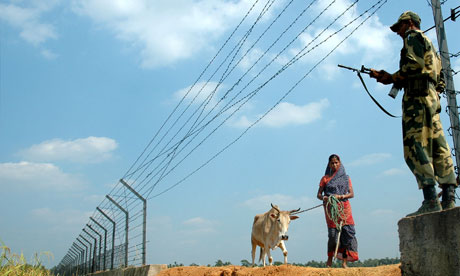
NO ONE loves a huge neighbour. For all that, India’s relations with the countries that ring it are abysmal. Of the eight with which it shares a land or maritime boundary, only two can be said to be happy with India: tiny Maldives, where India has the only foreign embassy and dispenses much largesse, and Bhutan, which has a policy of being happy about everything. Among its other South Asian neighbours, the world’s biggest democracy is incredible mainly because of its amazing ability to generate wariness and resentment.

Until recently it operated a shoot-to-kill policy towards migrant workers and cattle rustlers along its long border with Bangladesh. Over the years it has meddled madly in Nepal’s internal affairs. In Myanmar India snuggles up to the country’s thuggish dictators, leaving the beleaguered opposition to wonder what happened to India’s championing of democracy. Relations with Sri Lanka are conflicted. It treats China with more respect, but feuds with it about its border.
A review in The Economist. Here

Saturday, May 28, 2011

Nabil Elaraby and Indian frogs


It is an ancient game - the blame game. Suleiman can't account easily for all the blood on his hands that the waters in the Nile river can't wash away, and the sensible thing to do is to pass the buck to Mubarak. He also knows that there is an extraordinary revolutionary storm building up outside the cell where he is detained with the masses insisting that the military, the arch-reactionary segment of any society, must obey the will of the people and must craft policies so that Egypt's tormented soul is calmed.

And the fact of the matter is that the military is obeying. The Rafah crossing with Gaza is being permanently opened today. The Palestinians are no more under blockade! And Israel can't do anything about it. The Egyptian military is pressing ahead with the Palestinian unity pact despite protests by Israel, and ignoring Barack Obama's strictures.

Without doubt, Nabil Elaraby, Egypt's foreign minister - who is choreographing Egypt's new 'partnership' with US, is untying the security ties with Israel and re-engaging his country with Arab brotherhood, and is forging ties with Iran - arrives in Delhi today. Elaraby is a rare scholar-diplomat and will have many heart-throbbing, intellectually stimulating, utterly spell-binding things to narrate to the Indian leadership. And yet, our media and think tankers seem unaware who Elaraby is. They are full of the US Secretary for Homeland Security Janet Napolitano. Not a word about Elaraby! Aren't they like frogs in a well croaking at the sliver of sky above and thinking that is all that the firmament is about? The Indian foreign policy establishment which reached out to Elaraby is once again outstripping our intelligentsia and making the latter appear rather pedestrian. 

M. K. Bhadrakumar in Diplomatic Perspective. More Here.

Tuesday, May 24, 2011

Beware of the crocodiles in Africa

All Indian eyes are on Prime Minister Dr. Manmohan Singh –- as if he fills the whole of Africa with his towering presence. But Africa is a huge continent and no one can be the monarch of all he surveys. The distance between Addis Ababa in the heart of Africa and Abidjan on the west coast alone makes about 7000 kilometers, which is twice the travel route from Delhi to Thiruvananthapuram. Africa could contain quite a few colonial powers at the same time in the 19th and 20th centuries – Britain, France, Germany, Belgium, Italy, Holland.

But Dr. Singh has no pretensions. To borrow an expression from an Indian official accompanying Dr. Singh, there is “enough space” for many outside powers to simultaneously pursue their agenda in Africa. While Dr. Singh’s prime ministerial aircraft was descending on Addis, another distinguished visitor was taking off from Abidjan – French president Nikolas Sarkozy. Their missions present a study in contrast and give a timely warning to the Indian policymaker. Sarkozy went as a conquering hero who deployed French forces to effect a transfer of power in Cote d’Ivoire. What an irony -- military power to enforce the outcome of a democratic election! Dr. Singh, on the contrary, arrived in Addis showering petals of goodwill in a continent where Gandhiji understood the magical powers of non-violence.

To go back to the Indian official, what he said is absolutely true – “The West is setting up Africa as a zone of contention. They want to pit India against China. They want us to be at each other’s throat. But this is not the 1885 Congress of Berlin where European powers decided to scramble for African resources.” From the tenor of his intellect, one can identify the Indian diplomat as someone with a scholarly sense of modern history. The point is, history never quite ended in Africa with the national liberation struggles of the 1950s. The flow of history merely got punctuated and the struggle for outside domination merely took new forms as Cold War picked up. The rivalries somewhat eased when the bipolar world gave way. A respite followed but in retrospect it hardly lasted for a couple of decades.
What should really worry India is that if the push comes to a shove, the West may use military power to assert its prerogatives. Libya is an unfolding scenario. The African swamp is full of crocodiles, indeed. Sarkozy was fairly explicit that the West will not hesitate to interfere in Africa’s internal affairs if its interests are in jeopardy. Sarkozy’s vision is diametrically opposite India’s. A pattern is emerging. In the Middle East and Africa, through the Cold War era, the West gave an ideological veneer to its agenda of dominance by pitting communism as the antithesis. Today, what is unfolding is the banner of “democracy” – and in the name of advancing freedom and human rights, the doctrine of “humanitarian intervention” is being dusted up. Sarkozy is a no-nonsense type statesman and he bluntly said, “This is the new Africa policy that we shall adopt, and it’s an international policy”. Was he speaking on behalf of Dr. Singh as well? I doubt it. 
M. K. Bhadrakumar in Diplomatic Perspective. More Here

Sunday, March 20, 2011

India's Foreign policy and Malayali Interests


National Security adviser S.S. Menon was in Tehran on March 8, the eve of the Persian New Year. Attempted flattery went awry as President Mahmoud Ahmadinejad’s office let Mr Menon’s view be known that the President’s predictions of global economic and political developments were prescient.

The national security adviser’s Tehran sojourn was perhaps based on the following assumptions:
  • a convergence in concerns about post-US Afghanistan; 
  • Iranian worry over Gulf Cooperation Council-Saudi Arabia and the Iran stand-off over Bahrain’s street uprising by the majority Shia population; 
  • and the Indian United Nations Security Council membership till 2011-12. Such reasoning subsumed that Iranian national imperatives have remained static over the last decade. 
In fact, as Iran’s external environments evolved so did its polity and tactics. Mr Ahmadinejad, a hardliner, replaced the urbane Mr Khatami. The Vilayet-e-Faqih model created by Imam Khomeini was conditioned on the Supreme Leader balancing the interests of the clergy, the Revolutionary Guards and their off-spring, the Baseej and the Bazaar, or the business class.

The 2009 election has upset this balance.
China has replaced India and Japan as investor in oil and gas and technology sources. Iran has worked out a modus vivendi with the Taliban as the US is a common foe. The US is perceived as a retreating power, no longer a military threat. President Hosni Mubarak’s exit was followed by two Iranian naval vessels transiting the Suez Canal, a first in decades. Even the Taliban may want to reduce their dependence on Pakistan. Sa’di, the 13th century poetic voice of Shiraz, has this advice on revenge:
Wait rather till fortune blunts his claws
Then pluck out his brains amidst friends’ applause.

The Arab world is in turmoil, which can lead to a renaissance or chaos. India’s Gulf policy stands outsourced to sectional Malayali interests. Its West Asia policy is in induced sleep. Iran is leafing through its Sa’di poems. The Manmohan Singh government, with its mono-thematic focus on the India-US civil nuclear deal in UPA-I and Pakistan in UPA-II, needs new advisers and a wider spectrum foreign policy. The only Arabist secretary at headquarters in the ministry of external affairs deals with Europe. Otherwise its fate shall be of the partridge in the Persian poet Hafiz’s couplet:
O gracefully walking partridge whither goest thou? 
Stop Be not deceived because the ‘devious cat’ has said its prayers

K C Singh in The Asian Age. More Here.
Translate

Related Posts Plugin for WordPress, Blogger...