Secret reports seen by The Independent reveal that drug trials funded by western pharmaceutical firms at the Indian hospital set up for survivors of the Bhopal disaster violated international ethical standards and could have put patients at risk.Nina Lakhani in The Independent. Here
Some 14 patients died during the three trials examined by the reports. In one trial, for an antibiotic, five out of seven patients died during the trial or soon after it finished. While there is no suggestion that every death merits compensation, critics say there has been no adequate investigation into whether compensation was appropriate in any of the cases. None has ever been paid.
At least eight other trials were carried out on hundreds of Bhopal gas victims. The Independent has evidence of patients who were unaware that they were taking part in a trial at all. The conduct of the trials has exposed the hospital to furious criticism from activists who say that survivors have been used as guinea pigs without proper informed consent.
Showing posts with label Bhopal. Show all posts
Wednesday, November 30, 2011
From tragedy to travesty: Drugs tested on survivors of Bhopal
Wednesday, June 23, 2010
Bhopal Gas Tragedy : What about the poisonous gas of hypocrisy?
Twenty-five years and a half later what Bhopal exposed is our collective hypocrisy. It is not just a case of too lenient a punishment given by a single judge, but the failure of the entire system. Our Parliament, Judiciary, Executive – both political and permanent – and of course the Press all let us down.
And now we are all enacting a drama titled The Bail-out of Warren Anderson.
The media barons – not just young reporters and sub-editors – think that the readers or the audience are the greatest fools, therefore, should be bombarded with all the old stuffs just to dramatise the situation and earn some fast buck through advertisements. So whatever is appearing in the Press is a sort of re-mix of a quarter century old songs, of course tragic ones. All what is appearing about Anderson is nothing new.
Everyone who matters – and old enough – is aware that he was ushered back into his own country with full state honour by the Indian state.
We all know that we are not going to get the 89-year old Anderson. For a moment, suppose that he is extradited by the United States. What are we going to do with him? After all what have we done to the remaining eight Indian officials – one in fact died in the prolonged legal battle. Two years imprisonment and then bail. If Anderson is being demanded for this much then we must be generous enough to pardon him!
The issue is just not the accidental leak of poisonous gas, but how is it that an industry of such a nature got established in the densely populated part of Bhopal. Why did the government not force the industry to shift from the place?
India is a unique country where industries are situated in the heart of many cities while schools in the suburbs. Or if that is not the case the population is allowed to grow around the industries, which actually were in outskirts.
In many of our cities schools are set up 10-20 or even more kilometres away from the population because most of the private institutes are opened by businessmen who get cheap farm land in the outskirts of the town. Therefore, children are made to travel more than a couple of hours daily inhaling all sorts of gases on way and back.
In contrast, industries are situated in the heart of towns because the government lacks vision and planning. Not to speak of Warren Anderson or anyone else, we cannot influence or force our own industrialists to shift their bases outside, nor can we prevent the growth of population near the industries. The nexus between the ruling class – not just politicians – the industrialists and the land mafia plays a key role in accidents like the one which took place in Bhopal.
What we all need to tell the people frankly is: Yes we cannot bring Anderson because he was the boss of an MNC. No, even our own industrialists are above the law. And that Bhopal is just a small price for the ‘development’ of the country.
From Soroor Ahmed's article in Radiance. More Here.
Monday, June 21, 2010
What is wrong with the Indian media?
Bihar’s police blinded a dozen undertrials with cycle spokes and acid in Bhagalpur (the story of this casual act of punishment took weeks to emerge). Government engineers on deputation regularly abused tribal women, and there was no end to stories about the barbarism in the Indian village (there still is no end).
But there was always something missing from this journalism, and it is this: You could read Indian newspapers every day for 30 years and still not know why India is this way. The job of newspapers is, or is supposed to be, to tell its readers five things: who, when, where, what and why. Most newspapers make do with only three of these and are unlikely to really tell you “what”. This is because urban Indians are tired now of reading the horror stories that come out of our villages. Only a couple of newspapers, such as TheIndian Express, persist in reporting news that isn’t pleasant, and they haven’t much circulation.
No newspaper at all can tell you “why”, because they do not know themselves. The same stories from 30, 50, 100 or 500 years ago keep repeating here, and the peasant will still murder his daughter for falling in love. The happenings in the city are also difficult to understand. The news from May was that Delhi University sold radioactive Cobalt-60 as scrap. This killed the merchant who bought it and crippled another. The university, which is supposed to be a research body, had unthinkingly buried some of the other Cobalt-60 earlier and this will poison the ground.
Why are we so casual? Nobody can say, and there will be an explanation along the lines that it was an accident. But this will happen again, of course.
Union Carbide’s plant in Bhopal was owned by Americans. But it was managed, staffed and run by Indians. Its foreman was Indian and its workers were Indian. Why were they so casual about their own safety? The media doesn’t know, but it is convinced the solution lies with getting Warren Anderson.
From Aakar Patel's article in Livemint. More Here.
Bhopal Gas Tragedy : The REAL Issues missed by the media
The real issues therefore got pushed into the shadows, while the spotlight stayed on Anderson :
1. How and why did the government agree to settle for an eighth of the compensation it had initially demanded from Carbide? No questions asked, and so no answers given.
2. Why was even this absurd sum not distributed promptly among the victims? No questions, and no answers.
3. How and why did the Supreme Court do what it did, in reducing the charge to a less serious one? Ahmadi was questioned by Barkha Dutt, he came out with carefully bland answers, and it was left to her to expose the then Chief Justice by getting the then CBI director, Madhavan, on the same show to tell it like it was.
4. And why, after 25 years, had the government not done its basic duty by the Bhopal victims, irrespective of whether Carbide had paid and whether Anderson was living out a peaceful retirement? No questions again, therefore no answers.
That these were the real issues became clear towards the end, as the new group of ministers got down to work on precisely the issue of relief and rehabilitation. Ministers who might have been in the dock for the post-Bhopal scandals of betrayal and neglect, could get away scot free while the Congress and the government got exercised about protecting Rajiv's fair name on a non-existent charge.
Not to worry, though. The TV news channels got their required quota of a scandal per week, and they milked it for all it was worth, so that the the eyeballs stayed glued.
Next week, there will be another scandal to rant about.
From A Ramakrishnan's article in The Hoot. More Here.
Thursday, June 17, 2010
Bhopal Gas Tragedy, Manmohan Singh and Obama
I thought the day Bhopal verdict came, Manmohan Singh should have stood up and addressed the nation. He too could have assured the people that he will leave no stone upturned to bring the guilty, including the corporates involved, to pay for their misdeeds. Like Obama, he too could have assured the nation that he would ensure that Union Carbide/Dow Chemicals/Eveready pay for the human lives lost, maimed and also for the toxic clean-up.
It requires a courage of conviction to stand up and be counted.
Manmohan Singh could have promised to also go in for a political clean up. He should have sacked by now P Chidambaram, Kamal Nath, and Montek Singh Ahluwalia for being party to the exemption that Dow Chemical wanted. He should have simultaneously launched an investigation into what went wrong, and that includes the faulty lines in the Indian judiciary, and at the same time taken all political parties into confidence to bring corporate accountability. People have the right to know the names of political leaders, bureaucrats, judges, and the business tycoons who betrayed the nation. Even if it includes former President Giani Zail Singh and the former Prime Minister Rajiv Gandhi, so be it.
After all, Prime Minister is the head of the government. He can make the nation, and its judiciary, behave. He does not have the option of any excuses. He must deliver or be made to quit.
The fact is that India has no standards. Call it a 'systemic failure', the fact remains, as intrepid journalist Rajdeep Sardesai often reminds us: "is hamam main sab nange hain" (everyone is naked in this spa). Indians lack compassion, and are selfish to the core. Everyone, more so at the top, is trying to exploit the lesser children of the god. The more the bold and powerful you are, the more you are willing to slit the throat of others. Corporate India is doing it to the poor tribals. Manmohan Singh is only using State power to make that possible.
From Devinder Sharma's article in his blog. More Here.
Wednesday, June 16, 2010
"To mourn Bhopal and ready the nuclear liability bill is hypocrisy": P. Sainath
Over 20,000 killed. Over half a million victims maimed, disabled or otherwise affected. Compensation of around Rs.12,414 per victim on average on the 1989 value of the rupee. ($470 million or Rs.713 crore. And that divided among 574,367 victims.) Over a quarter-of-a-century's wait. To see seven former officials of Union Carbide Corporation's Indian subsidiary sentenced to two years in prison and fined Rs.1 lakh each. Not a single person from the far more responsible parent U.S. company punished.
Bhopal marked the horrific beginning of a new era. One that signalled the collapse of restraint on corporate power. The ongoing BP spill in the Mexican Gulf — with estimates ranging from 30,000-80,000 barrels a day — tops off a quarter-of-a-century where corporations could (and have) done anything in the pursuit of profit, at any human cost. Barack Obama's ‘hard words' on BP are mostly pre-November poll-rants. The BP can take a lot of comfort from two U.S. Supreme Court judgments in the past two years.
Seven years after Bhopal, Larry Summers, then chief economist at the World Bank, wrote his infamous memo. This said, among other things: “Just between you and me, shouldn't the World Bank be encouraging MORE migration of the dirty industries to the LDCs [Less Developed Countries]?” Summers suggested that “the economic logic behind dumping a load of toxic waste in the lowest wage country is impeccable and we should face up to that.”
Summers was to later say that he was joking, being sarcastic, and so on. Few buy that pathetic plea. Still, he went on to become President of Harvard and is now President Obama's chief economic adviser. And his memo's logic holds in the real world. It is exactly what has happened since Bhopal.
The UPA's response to the Bhopal sentences shows the government's ethics to be as despicable as they were in 1984. To mourn Bhopal and ready the nuclear liability bill is a hypocrisy hard to match. Bhopal was a post-facto sell-out. With the nuclear liability bill, the government sells out in advance. Is it only governments that have something to hide from Bhopal 1984? Even at the time, newspapers gladly carried planted stories suggesting “sabotage by Carbide's workers” had caused the disaster. Four years later, a UCC-funded ‘study' claimed to prove that the disaster was caused by a disgruntled worker at the plant. Carbide also ensured it could not be sued in U.S. courts. In December 1985, some of India's great legal luminaries, including Nani Palkhivala, helped persuade U.S. courts that Indian courts were the appropriate forum to deal with the case. (With results that we now live with.) That spared Carbide the relatively much higher damages the U.S. courts might have imposed.
All that the Union Carbide did and got away with in Bhopal is shocking. But not, alas, surprising. In the quarter-of-a-century since then, corporate power has only grown. Bhopals happen when societies privilege corporates over communities, and private profit over public interest. Curb corporate power, Indian or American, or it will rip you apart.
Remember too, that important thing Bhopal victims say over and over again: “we should see that this can never happen again.” However, we seem to be ensuring quite the opposite. The Civil Liability for Nuclear Damage Bill in its present form ensures that U.S. corporations causing any nuclear accidents on Indian soil will get away with minimal damages. A compensation now seen as a crime in Bhopal could be a legal norm in the future. Welcome back, Larry Summers.
Tuesday, June 15, 2010
Bhopal Gas Tragedy: A tragic business
Jahar Lal doesn’t remember the night of the Bhopal gas tragedy, but he can’t forget it either. He was born on the side of a road, as his mother fled from the poisonous gases that swept through old Bhopal. When she finally reached a hospital with her newborn son, the doctors there christened him Jahar, or poison. The name stuck.
He doesn’t like his name much. He has often thought of changing it but, he says, “It’s the name I’m famous by.” It draws 10-15 people every month to his small jhuggi in the mud-spattered lanes of Oriya basti.
Click here to view a slideshow of some of the businesses that have sprung up in the aftermath of the gas leak in Bhopal
More has been written on the Bhopal gas tragedy than any other disaster in India. In the 25 years that have elapsed, activists and government officials have surveyed the affected areas numerous times; curious tourists have wandered through the bastis in search of survivors’ tales; and journalists from around the world have scoured Bhopal for stories.
From Akshai Jain's article in livemint. More Here.
Bhopal Gas Tragedy: The silence of Sonia Gandhi is deafening
Can you hear the silence above the rising anger over the betrayal of Bhopal? The three most powerful people in India, Prime Minister Manmohan Singh, Mrs Sonia Gandhi and Prime Minister-in-waiting Rahul Gandhi have not said a word through a week of national outrage after a first-tier judicial verdict on a mass murder 26 years ago.
True, silence is also a statement, but one besieged by questions. Perhaps they have much to be silent about. The Congress party is not used to so much silence at the top. Unsurprisingly, the second-tier players made a mess when confronted by the pressure of public opinion. Sycophancy is not necessarily synonymous with clarity. By the end of the week, Congress activists had only prayer: that the quiet would speak up, and the loud-mouthed ordered to shut up.
Lip service is not the sort of service that always fetches you a complimentary tip. Jairam Ramesh, who loves his voice almost as much as his hair, thought he would help out by announcing that his proposed Green Tribunal would be located in Bhopal. It only served to remind media of the fact that on his only trip to Bhopal as Environment Minister, Ramesh had sneered at the anguish of the victims with a remark so utterly glib and insensitive that it fails comprehension. Ramesh said, triumphantly, “I held the toxic waste in my hand. I am still alive and not coughing. It’s 25 years after the gas tragedy. Let us move ahead.”
How fortunate for the nation that Ramesh was not sleeping in a slum on that night in December 1984 when methyl isocyanate seeped out of the Carbide plant, killing nearly 20,000 and maiming over a 100,000 more, before its eerie poison had exhausted itself. We must be thankful to the Lord that Ramesh was not a foetus killed in unknown wombs; or that he had not reached the age of 26 with twisted limbs and dark, angry eyes while a mother covered her son with a protective shawl in a helpless gesture of love.
How fortunate that Ramesh never met Raghu Rai, the great and compassionate photographer who has done more for the helpless than the Government of India, with its mighty instruments of state, and the Government of United States, with its great commitment to human rights, have done.
But let us touch the toxic soil with a smile and move on!
The central truth is that Bhopal is a saga of contemptuous betrayal in which anyone who aided an American corporate interest over the anguish of Indians was rewarded. The stain of shame began with Warren Anderson’s arranged escape in a Government plane, but it was only the beginning of the story. The CBI chargesheet in 1987 sought a jail sentence for 10 years for culpable homicide, “not amounting to murder”. Chief Justice A.H. Ahmadi watered this down; it is ironical that a Muslim Chief Justice should have been used for the ultimate compromise in a case in which most of the victims were impoverished Muslims. Ahmadi was given handsome post-retirement benefits. Anderson was never unduly troubled by the thought of returning to face trial despite an extradition treaty between India and the US. His bond was only Rs 25,000, exactly the same amount that the guilty have been required to pay after 26 years. The first demand that the Government of India made on behalf of the victims was for $3.3 billion. It settled for $480 million.
Token crumbs have been thrown periodically before the poor. The latest is a reconstituted Group of Ministers, headed by P. Chidambaram. Guess who was head of the previous GoM? Arjun Singh. And what is Chidambaram’s claim to fame? As Finance Minister he lobbied, along with Kamal Nath, Montek Singh Ahluwalia and Ronen Sen, on behalf of Dow Chemical, promising his Prime Minister rich rewards in the shape of American investment if Dow was forgiven. Why did Dow really want to return? To reclaim Carbide land in India, since it had bought Carbide but disclaimed Bhopal’s liabilities. Dow had kept aside over $2 billion for asbestos-victim compensation for Americans in another case, but had no money for Indians.
Why should it? Indians had no money for Indians. Jairam Ramesh, of course, is a member of the new GOM as well. They would have probably kept Congress spokesman Abhishek Singhvi as well, if he had been a minister, since Singhvi was a lawyer for Dow, and sent his missives on Congress letterheads. Indians were unconcerned about the truth that Carbide knew of the danger of a leak, but did nothing.
There is so much to be silent about.
The heroism of volunteers who have fought a powerful, sneering bipartisan system on behalf of victims, for no reward other than the calm of a conscience, is beyond words. Am I dreaming, or will there come a moment when every Indian conscience is touched by Bhopal?
From M J Akbar's comment Above the anger of Bhopal, the silence of Delhi. More Here.
Monday, June 14, 2010
What about the 'Indian Andersons'?
The Sunday Guardian (June 13, 2010), New Delhi, has published a Portrait of Shame. Since the newspaper is not still online it was difficult for me to cut and paste the pictures from web and paste it for you to see. It is not in that particular order, but here is the picture gallery.
While everyone is wanting Warren Anderson to be sent back to India, what is equally important is to take these powerful politicians and bureaucrats to task. The nation cannot let them get away so easily. At the same time, it is important to include (in this list) all those politicians who have been battling in the court for the multinational companies.
The three names in the original list which I have not been able to portray here are: Warren Anderson, Jairam Ramesh (for saying in 2009: "I held the toxic waste in my hand. I am still alive and not coughing. It's 25 years after the gas tragedy. Let's move ahead"), and also Ronen Sen, who in 2006-07 as Indian Ambassador to the US, made all the noises that Dow Chemical wanted to hear.
While everyone is wanting Warren Anderson to be sent back to India, what is equally important is to take these powerful politicians and bureaucrats to task. The nation cannot let them get away so easily. At the same time, it is important to include (in this list) all those politicians who have been battling in the court for the multinational companies.
There is an urgent need for a political cleanup. Unless we clear the known and exposed toxic elements from politics, no amount of clean up at Bhopal will ensure that such disasters do not happen in future. All political parties have to come clean on this. We as civil society should treat them as untouchables, vowing never to connect with them, a kind of a social boycott if nothing else works.
Wake up India, you need to do more than just feel ashamed.
KAMAL NATH: During 2006-07, as Union Commerce Minister Kamal Nath argued for soft terms to Dow in the hope of getting American investments into India.
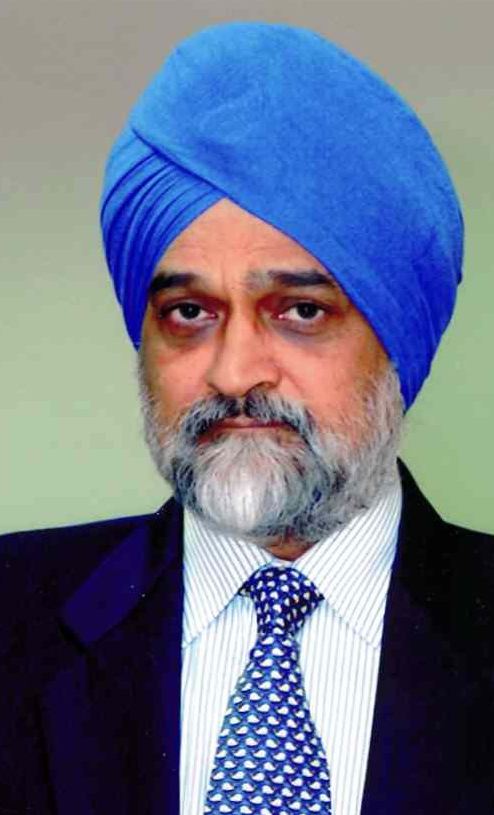
MONTEK SINGH AHLUWALIA: During 2006-07, Deputy Chairman, Planning Commission, was more loyal to Dow than to Bhopal victims. As virtual spokesman of American corporate interests, he played a key in pushing for relief for Dow.
ABHISHEK SINGHVI: Congress spokesperson and Rajya Sabha member offerd handosmely remunerative legal advice to Dow Chemical and wrote, on Congress' letterhead, to the Prime Minister in 2007 that Dow should not be held liable for the gas tragedy.
![]() |
| M K RASGOTRA: Was Foreign Secretary when the tragedy occurred, and used his office to help Anderson escape. He held a half hour meeting with Carbide chief that fateful evening. |
From Devinder Sharma's post in his blog. More Here
Sunday, June 13, 2010
''If thousands of the nouveau riche had died on that night in Bhopal, Anderson would still be in an Indian prison" laments M J Akbar
Trust me: if thousands of politicians, or their cousins, the nouveau riche, had died on that apocalyptic night in Bhopal, Anderson would still be in an Indian prison, rather than in America, protected by his company, and the company that his company keeps. But only the poor died in Bhopal. We treat our poor as dispensable chattel whose death is meaningless in the economic calculus, since there is no shortage of supply. Bhopal is class war.
Is it surprising — or not? — that while even the Obama administration jumped in with some gratuitous advice, Dr Manmohan Singh had nothing to say? Perhaps the Prime Minister would have been repetitive. In essence, the signal from Washington and Delhi is the same: forget the dead, get on with multinational life.
Barack Obama was not elected to ensure justice for the Indian victim. He is in the White House to protect American business, and defend the two-laws theory that motivates American international relations, whether in war or peace. When 11 American workers were killed in an oil rig blow-up in the Gulf of Mexico, Washington demanded $1.5 billion from BP. Nearly 20,000 dead in Bhopal, half a million affected, and the total compensation is $470 million. Do the math. Obama has promised to penalize BP for the current oil spill to the extent of many billions of dollars. Magistrate Manoj Tiwari wants only Rs 5 lakh as reparation from Carbide for mass slaughter.
When Exxon was fined $5 billion for the Alaska oil spill, nearly $40,000 was spent on the rehabilitation of every affected sea otter. The victims of Bhopal are, so far, entitled to $200 each.
Don’t do the math. It may turn you into a cynic.
From M J Akbar's column in Times of India. More Here.
Saturday, June 12, 2010
''Gas is leaking from the plant. Run for your life" - a first hand account of Bhopal's night
I was then a resident of old Bhopal, just a couple of kilometres from the Union Carbide plant. Around midnight on December 2, 1984, after finishing a story for The Sunday Observer, I went to bed. Before I fell asleep, I felt a sharp pricking sensation in my throat. I thought I was going to catch a cold. But a few minutes later, I was coughing and had difficulty breathing. I then heard loud sounds from outside. Looking out of the window, I saw people running. And then I smelt a very strong, foul odour. I moved back to the bedroom to find my wife coughing too. I realised there was something terribly wrong.
I immediately shut the windows and switched on the fan in spite of the December chill. I asked my wife to sit under the fan and called the police control room. When someone responded, I could hear him gasp for breath and cough. “What’s happened?” I asked. “Sahab, Union Carbide ki gas tankee phoot gayee hai. Dam ghut raha hai. (Sir, a Union Carbide gas tank has exploded. I am suffocating).” He barely managed to speak in between bouts of coughing.
So it has actually happened, I told myself. Had my prediction come true? I first wrote about such a probability—of things going horribly wrong at the plant—for a local weekly magazine, Rapat, in September 1982. Then I wrote another piece on it for Jansatta, which ran with the headline ‘Bhopal jwalamukhi ki kagaar par (Bhopal on the edge of a volcano)’. No one listened to me then, and today everyone, it seemed, was going to die. Me too? Never before had I felt so gripped by panic. I looked at my wife, who was speechless with fear. Like me, she also knew about the deadly gas.
Within seconds, the fear of death was overpowered by a stronger feeling—the urge to help people who still had a chance to escape. I picked up the phone and called my friend N.K. Singh, who was then the Indian Express correspondent. He lived far from where I was, in new Bhopal. “Run,” I implored him. “Gas is leaking from the plant. My time is up, but you still have some. Run for your life.”
From Raajkumar Keswani's article in Outlook. More Here
Friday, June 11, 2010
Bhopal, Corporate America, Warren Anderson and Manmohan Singh
With 15,274 dead, 5,74,000 affected, and a verdict that should have been delivered in 26 days taking 26 long years, and that too a mockery of justice, no heads have rolled. While the newspapers are splashed with reports of the Bhopal verdict, I find Prime Minister Manmohan Singh quoted in a separate report from Srinagar, which he visited yesterday, also published on the front pages. Isn't it amusing to read the PM saying: 'Will Safeguard human rights in Kashmir.'
You couldn't even safeguard the rights of the Bhopal victims, Mr Prime Minister.
I don't understand how come the Prime Minister does not feel morally compelled to submit resignation over the injustice delivered in the world's worst industrial disaster. He will not. Because he is busy laying out a red carpet for Corporate America. He has an 'incomplete task' on hand. How can he apologise when he is busy fine tuning the Nuclear Liability Bill, to be introduced in the next session of Parliament, for which he may receive an honorary doctorate from the Harvard.
Last time, he was conferred with an honorary doctorate from the Oxford, Manmohan Singh had showered praise on the British for what they did during the days of the Raj !
You may have forgotten something that still remains embedded in me. When the Securities Scam burst in India, and I am talking of the period when Manmohan Singh was the Finance Minister, it was not only stock broker Harshad Mehta who was involved. Two foreign banks, including Citibank, were also involved. I still remember vividly when Manmohan Singh refused to initiate any action against the erring banks, saying: "It will send out a wrong signal."
Didn't I say Company Raj is back.
Seeking extradition of Warren Anderson, Union Carbide CEO at the time of disaster and until his retirement in 1986, was never pursued vigorously because it would send a wrong signal. And yes, Manmohan Singh did send a 'right signal' when he said that "India loves George Bush".
From Devinder Sharma's post in his blog. More Here
Wednesday, November 12, 2008
Abhinav, Godse and bombs!!!
Abhinav!!!
Until now it was the most charming name of the most eligible bachelor of our great country.
Abhinav!! Abhinav!! Who is Abhinav? Everybody knew him. He was the first Indian to win Gold in Olympics. His name instantly evoked mixed feelings of happiness, pride and joy.
But, of late the name has lost its sheen. Abhinav now evokes revulsion, pity and sorrow. All because of Abhinav Bharat.
What is the Abhinav Bharat? What is its aim? Who are its members? The hardcore Hindu outfit with its ideological links to Veer Savarkar and Gopal Godse now has links, allegedly, with the army and this sets a dangerous precedent in its fight against terror writes Saikat Datta in Outlook.
Until now it was the most charming name of the most eligible bachelor of our great country.
Abhinav!! Abhinav!! Who is Abhinav? Everybody knew him. He was the first Indian to win Gold in Olympics. His name instantly evoked mixed feelings of happiness, pride and joy.
But, of late the name has lost its sheen. Abhinav now evokes revulsion, pity and sorrow. All because of Abhinav Bharat.
What is the Abhinav Bharat? What is its aim? Who are its members? The hardcore Hindu outfit with its ideological links to Veer Savarkar and Gopal Godse now has links, allegedly, with the army and this sets a dangerous precedent in its fight against terror writes Saikat Datta in Outlook.
The organisation’s activities clearly reveal its virulent character. In one pamphlet, it even exhorts members to seek revenge for the "killing of millions of Hindus over several centuries". It has also organised several "conventions" in Bhopal, Raisen and Vidisha districts of MP, where it is particularly active. At these conventions, it has described Muslims as "dharma shatrus (enemies of the faith)". More in tune with its militant character, one of the outfit’s slogans reads, "Kshama yachna nahin, ab to ran hoga, sangharsh bada bhishan hoga (No mercy or apology, now it will be war; the battle will be extremely intense)." Major (retd) Ramesh Upadhyay, arrested in connection with the Malegaon blasts, is the outfit’s working president.
What is Bhonsala Military School?
Spread over 160 acres, the Bhonsala Military School (See photo at the top) is different from other institutions of its ilk in that the curriculum stresses on religious instruction too. It seeks to instil "Bharatiya values" and the virtues of Lord Ram among its students. The school campus has been named Rambhoomi and its students Ramdandees. The symbolism blends the religious and the martial: they pray to an idol of Ram sculpted out of used cartridges. Kulkarni explains: "We created it out of the spent bullets fired by our students at the firing ranges."
Labels:
Abhinav,
Abhinav Bharat,
Bhonsala Military School,
Bhopal,
Gopal Godse,
hindutva,
Malegaon,
Olympics,
Outlook,
Pune,
Ramesh Upadhyay,
Saikat Datta,
Veer Sarvarkar
Subscribe to:
Posts (Atom)