Pages

Showing posts with label Real Issues. Show all posts

Wednesday, November 30, 2011

From tragedy to travesty: Drugs tested on survivors of Bhopal


Secret reports seen by The Independent reveal that drug trials funded by western pharmaceutical firms at the Indian hospital set up for survivors of the Bhopal disaster violated international ethical standards and could have put patients at risk.

Some 14 patients died during the three trials examined by the reports. In one trial, for an antibiotic, five out of seven patients died during the trial or soon after it finished. While there is no suggestion that every death merits compensation, critics say there has been no adequate investigation into whether compensation was appropriate in any of the cases. None has ever been paid.

At least eight other trials were carried out on hundreds of Bhopal gas victims. The Independent has evidence of patients who were unaware that they were taking part in a trial at all. The conduct of the trials has exposed the hospital to furious criticism from activists who say that survivors have been used as guinea pigs without proper informed consent.
Nina Lakhani in The Independent. Here

Friday, September 23, 2011

Onions, exports and tears


Within 11 days of imposing a ban on the export of onions, the powerful traders lobby forced the government to lift the ban. Succumbing to pressure from the onion traders, who normally cry hoarse in the name of farmers, the speed at which the onion trade made the government to bend backwards is a pointer to the monumental failure to curb food inflation.
For over 4 years now, ever since food inflation has hit the roof, I haven’t seen so much of political activity as I have observed in the last few days. Triggered by protest by Nasik onion traders, who had refused to partake in daily auction to demonstrate their anger against the sudden imposition of exports ban, the NCP chief Madhukar Pichad had first written to Prime Minister Manmohan Singh and the Commerce Minister Anand Sharma. Maharashtra Chief Minister Prithviraj Chavan had deputed his Agriculture Minister Radhakrishna Vikhe-patil and some of his colleagues to meet Finance Minister Pranab Mukherjee and other concerned ministers.
Devinder Sharma in Ground Reality. Here

Year 2008-09
Onion production: 13.56 million tonnes
Fresh onion export: 1.67 million tonnes
Raw onion that is dried and exported: 0.19 million tonnes
Total raw onions feeding into exports: 1.86 milion tonnes or approximately 14 percent of the country's production, which is huge for any single commodity. This naturally makes exporters a very powerful lobby. And when exporter join hands with hoarders (in many cases they are the same), they are unstopable. This is what has happened this year as I found during my tour of APMC mandis earlier this year.

Q. Who wants ban on onion exports?
A. Govt. because it wants it to cool down prices and dried onion exporters as they are unviable if price paid to farmer goes above Rs. 10/kg.

Q. Who don't want a ban on exports?
A. Farmers, hoarders, exporters. The latter two work in tandem while the former plays into their hands with the false hope that s/he would get a higher price. Exporter gains from higher international prices, hoarder from temporary spike in domestic prices, which is why both do not want a ban on exports. Between the two, hoarders gain more as opening up exports gives them a legitimate reason to further jack-up prices by claiming supply constraints. The farmer, as usual, goes back home with barely 2.5 percent of the retail price of his/her produce.

Q. Why does the government ban exports?
A. Because it does not want to act against hoarders. Free market principles does not regard hoarding as illegal and the govt. is following them. On the other hand, the same govt. goes against free market principles and bans exports to increase supply into domestic markets and cool prices because this is politically more palatable and is also easier to enforce.

Q. Does this work in principle?
A. At times it does. The price-crisis period is generally during Sep-Oct and this is when hoarders make a killing. Kharif onion has higher moisture content as compared to Rabi onion and therefore the shelf life is less. Due to this reason exporters also compete against hoarders during this period as they want to ship out their stocks before they spoil.

Q. Why did Pawar open exports this year?
A. One, lobbying by exporters-hoarders lobby. Two, even as I am writing this, farmers in Nasik district are sitting on roadsides with piles of onion which they are unable to sell at anything more than Rs. 2/kg (I have asked a consultant out there to take a few pics and mail them over. Will share them as they arrive); Pawar does not wish to be pelted with onions second time in a row. Politics rather than a non-existent supply-demand mismatch is what dictated the govt.'s hands.

Q. Will farmers now gain since exports have been cleared?
A. Nope. They will still be forced to sell their produce at Rs. 2/kg or marginally higher.
Bhaskar Goswami of New Delhi comments in Ground reality. Here and Here

Monday, April 18, 2011

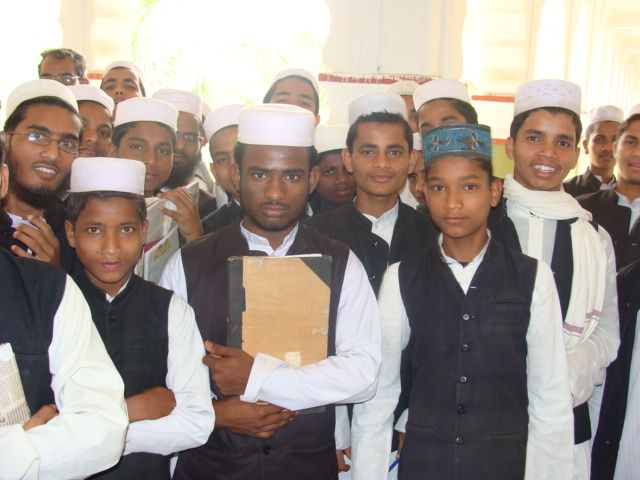
Ten useful Tips for those who study Islam


Many times young Muslims decide they want to become scholars and embark on the path of knowledge with little knowledge of what to expect. I was such a youngster who signed up for an “‘alim” course with no idea what an ‘alim is or where it would lead me.
In order to help my fellow Muslims prepare themselves psychologically and not repeat the mistakes I made, I present to you ten things I feel every student of knowledge must know (in no particular order):

1.  A few years of study does not make one a scholar:
Too often, young Muslims study a few books or for a few years and then develop a “scholar” complex. They begin to force their opinions on others as if they can’t be wrong. They become intolerant to other views, and they write anybody off who disagrees with them as deviant.

We need to realize, before we even begin our journey of knowledge, that the sciences of Islam are many and deep; the variety of opinions in fiqh are multiple, and the chances of always being right are slim. I advise all of my fellow young Muslims to tread carefully, keep egos in check, approach differences with the possibility of being wrong, and never forget to say “Allah knows best”.

2. Manners come first:
In the past, most scholars would train their students in good manners before teaching them Islamic knowledge. Parents, too, would encourage their children to learn manners before the Islamic sciences.
Sadly, today many institutes do not teach good manners to their students, expecting them to automatically gain them through their study of Islam. This leads to Islamic teachers with bad manners, which in turn chases people away from Islam.

In this regard, anybody who is studying or teaching Islam must learn the proper manners of dealing with people, mercy, tolerance, and being non-judgmental and must possess a personality that attracts people; otherwise, we might do more harm than good.

3. Studying Islam does not make one immune to sin:
Some people have the misconception that if they study Islam, they will reach a level of piety from which they can’t slip. The reality is that Shaytan tries even harder to lead people of knowledge astray as it has a more detrimental effect on the community as a whole.

So instead of temptations growing less, they are more likely to increase and intensify as Shaytan tries to use every means at his disposal to lead us astray. We need to realize this, prepare for it, and never let our guard down as the Shayateen try very hard to make a knowledgeable Muslim fall astray.

4. People will judge you:
While we should not be judgmental to people as Islamic teachers, the reality is that people will still judge you. Many people are intimidated by practicing Muslims. When they see a practicing Muslim, they see their own flaws and deficiencies and so they search for fault in that individual. We should not be surprised if people judge our clothing, mannerisms or weaknesses; it is their way to try and console themselves or justify their sins. We need to always keep this in mind and be able to respond appropriately.

5. You represent your Faith:
When a person chooses to study Islam, especially once they earn a title, they automatically become a representation of the deen. When people see an Imam or a Shaykh, they expect to see a living example of Islam. If people see such a person sinning, they will either lose respect for him and become disillusioned about Islam, or they will take it as proof that it can’t be that big a sin. Either way, for an Islamic teacher, our lives represent our deen, so we should always be careful not to give a wrong impression of Islam.

6. You will be tested:
Undoubtedly, life is a test and every human is being tested all the time in different ways. However, one should not think that because one is studying Islam and teaching it, Allah will grant a life of ease and comfort. Rather, history proves that those closest to Allah are the most severely tested. The Prophet (peace be upon him) said, “The most severely tested people are the prophets, then those closest to them in piety then those closest to them.”

Be prepared to be tested and take it as a sign that Allah loves you and wants to test your love for Him. Remember that the Prophet (peace be upon him) said, “Whoever embarks on a path to study Islam has embarked on the path towards Paradise.” It is not the information alone that takes a person to Paradise; it is his fulfillment of its rights by understanding, practicing and preaching it to others and dealing with all the problems that go along with this that ultimately leads to Paradise.

7. Studying should not be an end; rather it should be a step to a higher goal:
I have met many Moulanas, Imams and Shaykhs with no goals or aspirations. Despite the ummah having so many issues that need dealing with, these men don’t seem to care. Upon further analysis, I realized that they set out to study with one of the following goals:  to please their parents, to get a title, or to get the knowledge. Once they obtained the knowledge, they did not know or care about what to do next, so they carried along with their lives like donkeys carrying books.

Any person who studies Islam should be introspective and find a good motivation to study. Perhaps you would like to become a da’ee and a means of guidance for non-Muslims. Perhaps you would like to establish an Islamic centre in an area that needs one. Perhaps you would like become a mujtahid in a field that is lacking many quality scholars. Whatever you decide, it should be something noble that you wish to do for the sake of Allah after completing your studies. In short, studying should not be a goal but a means to help accomplish higher goals.

8. You can’t change everyone:
In life, we do not always get what we want. Similarly, in Islamic work things don’t always go our way. Remember that not everybody you meet will agree with you, listen to you or accept your message. Rather, there will always be people who will disagree with you or flat out reject you. This is reality and we have to be prepared for this by realizing guidance is only in Allah’s Hands, and we are only responsible for conveying the message.

9.  You will make mistakes:
Many of us study Islam to make up for the sins of our past. Yet, being humans, we are never free from sins and mistakes and so some people become depressed and give up Islamic work when they realize that they are now knowledgeable but still occasionally fall into sin.

The truth is that the Shaytan wants us to quit and by doing so we are just playing into his hands, but Allah is Most Forgiving to those who repent. Every time you fall down and make a mistake, pick yourself back up, turn to Allah in repentance and try again to be a good Muslim, and never EVER allow your sins or mistakes stop you from doing Islamic work. Rather, it should motivate us to do more Islamic work so that our good deeds outweigh our sins on the Last Day.

10. The reward for studying and teaching Islam is worth it:
While most of the above make it seem like Islamic Work is a difficult field, that is not the purpose of this article. The purpose was solely to prepare for the many challenges and responsibilities we face while trying to serve Allah.

The reality is that the reward of dealing with all of the above is truly worth it, whether it is the rewards in this world or in the akhirah. As far as the akhirah goes, we know that the path of knowledge leads to Paradise but additional to that is the fact that insha’Allah you will get the rewards for the good deeds of those you teach or inspire to do good.

In this sense, it is one of the only good deeds we can do where the reward keeps multiplying. The Prophet (peace be upon him) said, “When a person dies, all their deeds end except three: charity which continues to benefit, knowledge he left behind which people benefit from, and righteous children who pray for him.”
As far as this world goes, the greatest reward an Islamic worker can receive in this world is seeing the fruits of his efforts. When a person tells you they changed and became a better Muslim because of your influence or when a person takes their shahadah at your hands, there is no feeling equal to it, and any sacrifice you have being through for the deen feels worth it.

So, my beloved brothers and sisters, let us study Islam, seeking its rewards yet knowing the responsibilities and trials that go along with it. I wrote this firstly as a reminder to myself as well as to anybody else involved in the field of Islamic Studies. May Allah keep us all steadfast on His deen.  Ameen.

Ismail Kamdar in Muslim matters. More Here.

Saturday, April 16, 2011

America has lost the future : Clyde Prestowitz


The current political and cultural polarization of USA was seen as probably worse today than at any time since the outbreak of the Civil War exactly 150 years ago. The geography of this polarization is also similar to that of the Civil War period and the issue of a powerful federal government versus states' rights remains pretty much the same.

The polarization today is being propagated by wealthy and powerful elements on Wall Street and elsewhere that fund bitter, attack dog politics and sharply polarized media commentary.

The power of big financial and corporate lobbies is such that they overwhelm reform efforts with huge lobbying campaigns. The effort to regulate the banks and establish accountability for them has failed to a large extent. The Dodd/Frank law that is supposed to re-regulate the banks fails badly because the reform of the banks to date has involved actually making them bigger and fewer. The biggest 50-odd institutions are being designated as too big too fail, but are not being subjected to any rigorous or vigorous oversight and regulation.


But it gets worse. Americans are far too indebted and are trying to repair their personal balance sheets and cutting consumption to pay down debt. But this is retarding recovery and forcing the government to spend more in order to keep some kind of growth going and unemployment falling. To avoid falling back into recession, the government spending will have to continue for quite some time. But this will exacerbate the U.S. trade and current account deficits and increase overseas dollar holdings.

The rest of the world is pretty strongly dedicated to export-led growth. The Germans are forcing the rest of Europe to deflate and the only way for Europe to get any growth is through exports. China says it wants to rebalance its trade and focus more on domestic consumption led growth. It's nice that China wants to do this, but it will be extremely difficult if not impossible in practice for China actually to reverse its export led policies.

The result is likely to be a continued shift of the production of tradable goods and the provision of tradable services outside of the United States to off-shore locations.

These trends will see a continued erosion of America's ability to provide a good, middle class standard of living at home and to extend security abroad.

The really smart people have already put their wealth in gold bars and moved to New Zealand.

Clyde Prestowitz in Foreign Policy. More Here

Sunday, March 20, 2011

Do we need nuclear power in India? At what cost?


The nuclear power emergency in Japan has raised two major questions regarding nuclear power.

First, can a disaster comparable to the one in Japan happen here? The answer, of course, is yes — whether caused by an earthquake or some other event or series of events. Nature is unpredictable and human beings are fallible. It could happen.

So the second question is whether it makes sense to follow through on plans to increase our reliance on nuclear power, thus heightening the risk of a terrible problem occurring here. Is that a risk worth taking?

There has been a persistent tendency to ignore the toughest questions posed by nuclear power: What should be done with the waste? What are the consequences of a catastrophic accident in a populated area? How safe are the plants, really? Why would taxpayers have to shoulder so much of the financial risk of expanding the nation’s nuclear power capacity, an effort that would be wildly expensive?

A big part of the problem at Japan’s Fukushima Daiichi power station are the highly radioactive spent fuel rods kept in storage pools at the plant. What to do, ultimately, with such dangerous waste material is the nuclear power question without an answer. Nuclear advocates and public officials don’t talk about it much. Denial is the default position when it comes to nuclear waste.

In New York, Gov. Andrew Cuomo said again this week that the 40-year-old Indian Point nuclear power plant in Westchester County, 35 miles north of New York City, should be closed. Try to imagine the difficulty, in the event of an emergency, of evacuating such an area with its millions of residents. “This plant in this proximity to New York City was never a good risk,” said the governor.

There are, blessedly, very few catastrophic accidents at nuclear power plants. And there have not been many deaths associated with them. The rarity of such accidents provides a comfort zone. We can look at the low probabilities and declare, “It can’t happen here.”

But what if it did happen here? What would the consequences be?
If Indian Point blew, how wide an area and how many people would be affected, and what would the cleanup costs be? 
Rigorously answering such questions is the only way to determine whether the potential risk to life and property is worthwhile.

The 104 commercial nuclear plants in the U.S. are getting old, and many have had serious problems over the years. There have been dozens of instances since 1979, the year of the Three Mile Island accident, in which nuclear reactors have had to be shut down for more than a year for safety reasons.

Building new plants can be breathtakingly expensive and requires government loan guarantees. Banks are not lining up to lend money on their own for construction of the newest generation of Indian Points.

In addition to the inherent risks with regard to safety and security, the nuclear industry has long been notorious for sky-high construction costs, feverish cost-overruns and projects that eventually are abandoned.

Nuclear power is hardly the pristine, economical, unambiguous answer to the nation’s energy needs and global warming concerns. It offers benefits and big-time shortcomings. Ultimately, the price may be much too high.

Bob Herbert in The New York Times. More Here.

Fukushima's failure, India's nuclear policy and some lessons


To be trite, words are inadequate to describe the trio of disastrous events which have hit Japan recently - from earthquake, to tsunami, to potential nuclear meltdown. While the first two disasters are acts of nature, the third revives the historic trauma of the original detonations of Hiroshima and Nagasaki at a time when the idea of a nuclear energy renaissance had been gaining international popularity. Japan occupies a crucial role in these plans as a manufacturer, investor, and even moral arbitrator related to nuclear technology.

Domestically, nuclear power makes up 13.6 per cent of Japan’s total energy supply and a substantial portion of its electricity production.  Globally, the destruction of the nuclear plants in Fukushima will have international consequences for future nuclear power installations. Europe, India and the United States have all been in the process of shifting more of their future energy needs to nuclear power. How might Fukushima alter that shift? What will be the short-term energy ramifications of such a shift? What might be the more long-term geopolitical consequences?

There was a 1999 critical nuclear accident at a small experimental reactor in Tokaimura, Japan.  Breaches in existing safety standards caused the accident, damage (resulting in two fatalities) was limited, and it did not grab the imagination of the international public. In contrast to Tokaimura, the present extensive nuclear accident in Japan is dramatic and symbolic; already other countries that use nuclear power are looking into the safety of their own reactors. But change is reactor construction and safety may well not be the most dramatic shift in nuclear energy politics. There will be ripple effects.

Even Europe is rethinking its reliance on nuclear power.  In Germany, nuclear energy has been a contentious issue for decades - nearly 70 per cent of Germans opposed nuclear power even before Fukushima. Henrik Paultiz, of International Physicians for the Prevention of Nuclear War, believes that “the accident in Japan could lead to a major rethink in Europe. And not before its time. Governments have not been transparent enough about the safety levels of the nuclear power sector.”

If some European countries who have been relying for some of their energy needs on nuclear power for decades are reconsidering nuclear energy in response to Fukushima, the US is in an even more politically charged position. Following the Three Mile Island nuclear accident in 1979, nuclear energy became deeply unpopular. Yet support for nuclear energy has experienced resurgence and is one of the few issues which has support from both Democrats and Republicans. However, Fukushima is causing all to pause in their enthusiasm. Senator Joseph Lieberman captured the new ambivalence around nuclear energy: “I think it calls on us here in the U.S., not to stop building nuclear power plants but to put the brakes on right now until we understand the ramifications of what’s happened in Japan.”  

In India, the reaction to Fukushima has focused more on safety of domestic facilities rather than doubts about the safety of nuclear energy itself. Prime Minister Manmohan Singh has ordered the Nuclear Power Corporation of India to review its safety systems and security designs. The Government of India is also considering additional environmental safeguards to ensure safety of future nuclear reactors. Even before Fukushima, there have been growing protests of the “not in my backyard” variety related to the construction of Jaitapur reactor in Maharastra. Fukushima could well intensify these protests to the point of halting construction.

In the short-term, Fukushima will make nuclear power plant construction at the very least a much more difficult proposition in many places in the world.

Lydia Walker in ipcs.org. More Here

Monday, June 21, 2010

Bhopal Gas Tragedy : The REAL Issues missed by the media


The real issues therefore got pushed into the shadows, while the spotlight stayed on Anderson:
1. How and why did the government agree to settle for an eighth of the compensation it had initially demanded from Carbide? No questions asked, and so no answers given.
2. Why was even this absurd sum not distributed promptly among the victims? No questions, and no answers.
3. How and why did the Supreme Court do what it did, in reducing the charge to a less serious one? Ahmadi was questioned by Barkha Dutt, he came out with carefully bland answers, and it was left to her  to expose the then Chief Justice by getting the then CBI director, Madhavan, on the same show to tell it like it was.
4. And why, after 25 years, had the government not done its basic duty by the Bhopal victims, irrespective of whether Carbide had paid and whether Anderson was living out a peaceful retirement? No questions again, therefore no answers.
That these were the real issues became clear towards the end, as the new group of ministers got down to work on precisely the issue of relief and rehabilitation. Ministers who might have been in the dock for the post-Bhopal scandals of betrayal and neglect, could get away scot free while the Congress and the government got exercised about protecting Rajiv's fair name on a non-existent charge.
Not to worry, though. The TV news channels got their required quota of a scandal per week, and they milked it for all it was worth, so that the the eyeballs stayed glued.
Next week, there will be another scandal to rant about.  
From A Ramakrishnan's article in The Hoot. More Here.

Translate

Related Posts Plugin for WordPress, Blogger...