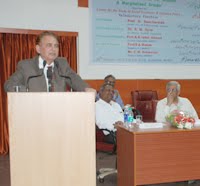
1200 copies of Marathi Translation of Quran sold Akhil Bhartiya Marathi Sahitya SammelanMaharashtra has been perceived as the breeding ground of extremists of Hindutva brand. The Maharashtrians were the leading mascots of Hindutva before the advent of Godhra and Modi. The list of extremists produced by the Marathas is endless. Savarkar, Gowalkar, Deoras, Pragya etc etc.Now here comes the good news. All praise to Allah..!
Tuesday, April 13, 2010
Maharashtra, Hindutva and Holy Quran..!
Monday, April 12, 2010
சார் போட்டு பேசுவது எந்த அளவுக்கு சரி?
We Tamils are fond of using the word 'Sir' frequently in our conversation.
திருச்சி எம்பி சிவா அவர்கள் மக்களவையில் பல்லாண்டுகளுக்கு முன்னர் பேசியது இன்றும் என் நினைவில் நிற்கிறது. ஏன் தெரியுமா? அவர் வார்த்தைக்கு வார்த்தை சார் சார் என்று சொன்னது தான். சென்ற வாரம் டாக்டர் அப்துல்லாஹ் (பெரியார் தாசன்) அவர்களை சந்தித்துப் பேசிக் கொண்டிருந்த போதும் உடன் வந்திருந்த நண்பர் அவரை சார் சொல்லிப் பேசினார்.
சார் போட்டு பேசுவது எந்த அளவுக்கு சரி?
கிருஷ்ணா The Wallstreet Journal இல் சுவையாக எழுதி இருக்கிறார். விவரம் வருமாறு:
I had turned on the television soon after getting home from work in the hope of wiping out a rough day.To read the full article click here.
The FilmFare awards — Bollywood’s tribute to its own - were on. The speaker was Neil Nitin Mukesh, an up and coming heartthrob in Tinseltown. He was addressing superstars Shah Rukh Khan and Saif Ali Khan, the comperes for the awards ceremony.
The two Khans, in an attempt to inject humor into the proceedings, were posing questions to other actors in the audience. Those questioned, in turn, were expected to respond with creative insults, tongue-in-cheek, to the two Khans — all in good humor.
Shah Rukh is in his mid-forties and Saif, I suspect, just turned 40. Wikipedia tells me Neil Nitin Mukesh is 28. When I heard Neil speak, it made me stop and wonder why a grown man was addressing the two Khans as “Sir.”
My first thought was that it was the sheer inadequacy of the English language. In Spanish there is usted — a respectful form of you. And of course nearly every Indian language has the Hindi equivalent of aap — a pronoun reserved to demonstrate respect to someone senior, elderly or even, at times, a respected colleague. The use of these forms, from Bhojpur to Chettinad, is rarely about status or inequality but largely about courtesy and culture.
But there remained a niggling feeling: What if this is not a linguistic shortcoming but something deeper?
I shared my theory the next morning with my two business partners, who were actually working instead of wondering about Bollywood’s sociological makeup.
Did not most Tamil folks in Chennai use “Sir,” abandoning the more archaic (and potentially feudal) “ayya,” they argued. The Tamil movie industry, too, is rife with Rajni-sir and Kamal-sir, though I wasn’t sure if that bolstered their case or not. By that point anyway they had returned to doing real work.
What is my gripe with “Sir,” you ask? Yes, it is perfectly serviceable for class 8 students to use it when addressing their English or even their Hindi teacher. Possibly it works for the maitre d’ at a fancy Euro restaurant since his snooty attitude does away with any illusion of who’s the master.
Any other time, there’s far too much of the servile tone of a colonial job applicant imbued into “Sir,” which 60-odd years of Babudom have only cemented further.
Spend an afternoon sitting in a bank manager’s office, on a manufacturing shop floor or in a police or income tax commissioner’s office and you are likely to encounter “Sir” enunciated in every imaginable accent. If you have been in a hospital, you can’t but help see the doctors get their share of “Sir,” many a times as “Dr.-Sir.” Even within the information technology industry — despite its global exposure and purported performance-based culture -– deference, at times even subservience, follows the “Sir.”
Saturday, April 10, 2010
Introduce Islamic Banking to save the farmers of Vidharba, says M S Swaminathan
Monkombu Sambasivan Swaminathan (Tamil: மான்கொம்பு சாம்பசிவன் சுவாமிநாதன்) has come out with an brilliant idea to salvage the farmers of vidharba.
He has said that ISLAMIC banking could be the solution to farmer suicide crisis in Vidarbha in a report in in The New Indian Express.
Speaking at Karuna Ratna award presentation function, he said the exorbitant lending rates charged by money lenders in Vidarbha had created a vicious cycle of debt and suicide in the region.To read the full story click here.
“Even yesterday we heard news about 30 farmers who committed suicide in Vidarbha. Islamic banking, which propagates zero interest lending, could hold the key to solving this crisis”, he said.
IPL = League of Priviliged Indians!!
IPL is not Indian Primier League. It is League of Priviliged Indians. Veteran writer, scholar and historian Ramachandra Guha writes in The Telegraph.
The promoters of the IPL claim to be speaking on behalf of Indian cricket. However, the polarizing instincts of their tournament run counter to — and threaten to defeat —the inclusive and democratizing trends that were inaugurated by the victory of the Indian cricket team in the 1983 World Cup and the boom in satellite television that followed.To read the full article click here.
From the 1950s to the 1970s, Indian cricket was dominated by a handful of large cities — such as Mumbai, Delhi, Chennai, Hyderabad, Calcutta and Bangalore. But from the 1980s onwards, smaller and previously more obscure centres started sending players to the national side.
Cricketers from towns in Bihar, Orissa, UP, Haryana, Madhya Pradesh, from Vadodara, even Jharkhand, began winning India caps. Simultaneously, international matches, once held only in the big metros, now began being hosted by Guwahati, Cuttack, Gwalior, Jamshedpur, and the like.
The Indian Premier League may be more appropriately renamed the League of Privileged Indians. For this tournament both reflects and further intensifies a deep divide between the India of wealth and entitlement and the India — or Bharat — of poverty and disenfranchisement.
Writing about the dangerous growth of inequality in India, the economist, Amartya Sen, warned some years ago that if present trends continued, half of India would look like the American state of California, the other half like sub-Saharan Africa. Since he made this comment, California has been beset with an acute — and apparently irreversible — fiscal crisis. Perhaps we might then substitute the state of Massachusetts for it.
But the point remains; there are indeed two Indias, the one which is awarded IPL franchises, and the other which is not.
Wednesday, March 31, 2010
Self help is the best way out!
Dr S M Ilyas, former Director, NAARM has nailed it in the head. He says,
Muslims are backward and they have become secluded. This is the fact. Of late the government & the society have accepted this glaring fact. The findings of Rajinder Sachar Committee have also substantiated the case.
However, Muslims in India shall not wait for the government or any other agency to ameliorate their conditions.
The initiative to come out has to be taken by themselves only.
Self help is the best way out. Globalization & economic reforms, have opened up a lot of opportunities. It is for us to grab them with both the hands.
Dr S M Ilyas said these piece of advice while addressing the valedictory session of a National Conference at Maulana Azad National Urdu University (MANUU) on Exclusionary Perspectives for Muslims & Marginalized Groups. held in Hyderabad recently.
To read more, click here.
Subscribe to:
Posts (Atom)